

Fernanda Belga Ottoni Porto; Christine Sampaio Archanjo; Wilma Lelis Barboza
DOI: 10.17545/eOftalmo/2026.0001
Este artigo pertence à Edição Especial Da Teoria à Prática: Reabilitação Visual para Oftalmologistas
Visual rehabilitation is one of the most humane and transformative pillars of contemporary ophthalmology. At a time when genetic diagnostics, personalized treatments, and cutting-edge technologies are rapidly advancing, it is essential to reaffirm that comprehensive care for the visually impaired goes far beyond curing: it involves welcoming, functionality, and autonomy.
According to the World Health Organization (WHO), more than 2.2 billion people live with some form of visual impairment, and at least 1 billion of these cases could have been prevented or have not yet received adequate assistance. These data show the need for an integrated, continuous, and person-centered eye care model, as proposed by the WHO in its Integrated People-Centered Eye Care initiative1.
In this context, visual rehabilitation plays a strategic role. It is not the final stage of ophthalmic treatment but a natural extension of care—a process that offers visually impaired people resources, strategies, and interventions that promote independence, effective communication, and social inclusion. Although ophthalmology has made remarkable achievements in preventing avoidable blindness, the current challenge is to broaden our view beyond diagnosis and treatment and incorporate visual rehabilitation as an inseparable part of clinical practice.
The Brazilian Council of Ophthalmology (CBO) has endeavored to strengthen the network of care for the visually impaired by encouraging the training and engagement of ophthalmologists throughout the country. In line with these efforts, CBO’s Visual Rehabilitation project aims to promote knowledge, bring professionals together, and encourage the creation of care flows that allow patients to move smoothly and with dignity from diagnosis to rehabilitation.
This Special Edition of eOftalmo was created as part of this movement. It brings together some of Brazil’s leading experts on the subject, who present a comprehensive and practical approach to visual rehabilitation in all its dimensions—from epidemiology to assistive technology, from childhood to adulthood, and from clinical assessment to interdisciplinary assistance.
The issue opens with an overview of visual impairment, which highlights the challenges and barriers to care access that exist in Brazil. It then revisits the fundamental concepts of visual rehabilitation and the role of an ophthalmologist in this process. It also covers functional vision assessment, the use of optical and non-optical resources, emerging technologies based on artificial intelligence and augmented reality, and even the role of contact lenses in low vision.
The articles also include eye assessment from a rehabilitation perspective, visual habilitation in childhood, and the multidisciplinary approach that integrates occupational therapists, psychologists, educators, and social workers. Finally, the reader will find an analysis of national and international visual rehabilitation networks, with an emphasis on the importance of strengthening public services and expanding access to specialized care.
By bringing together this set of topics, eOftalmo aims to offer Brazilian ophthalmologists a tool for updating and reflection, with the reaffirmation of the CBO’s commitment to a person-centered, inclusive, and socially committed ophthalmology practice.
We hope that this special issue will inspire the clinical and human vision of its readers and contribute to visual rehabilitation being increasingly recognized as an essential part of ophthalmology practice in Brazil.
Fernanda Belga Ottoni Porto
Editor-in-Chief, eOftalmo
Christine Sampaio Archanjo
Guest Editor
Wilma Lelis Barboza
President of the Brazilian Council of Ophthalmology 2024-2025
REFERENCE
1. World report on vision. Geneva: World Health Organization; 2019 (https://apps.who.int/iris/handle/10665/328717)
| INFORMAÇÕES DOS AUTORES |
|
 |
»Fernanda Belga Ottoni Porto http://lattes.cnpq.br/3705547122177092 https://orcid.org/0000-0002-4308-1766 |
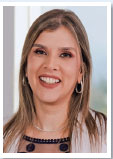 |
» Christine Sampaio Archanjo http://lattes.cnpq.br/4558048847563050 https://orcid.org/0009-0009-2820-9475 |
 |
» Wilma Lelis Barboza http://lattes.cnpq.br/7647287686911668 https://orcid.org/0009-0002-4756-9723 |
Funding: No specific financial support was available for this study.
Conflict of interest: None of the authors have any potential conflict of interest to disclose.
Received on:
January 26, 2026.
Accepted on:
January 28, 2026.
 eOftalmo está licenciada com uma Licença Creative Commons Atribuição-NãoComercial 4.0 Internacional.
 © 2026 Todos os Direitos Reservados


 Ler em português
 Português PDF
 Imprimir
 Enviar este artigo por email
 Como citar este artigo
 Enviar um comentário
 Mendeley
 Pocket
 Compartilhar no Facebook
 Compartilhar no Twitter
 Compartilhar no Linkedin
 Compartilhar no WhatsApp